

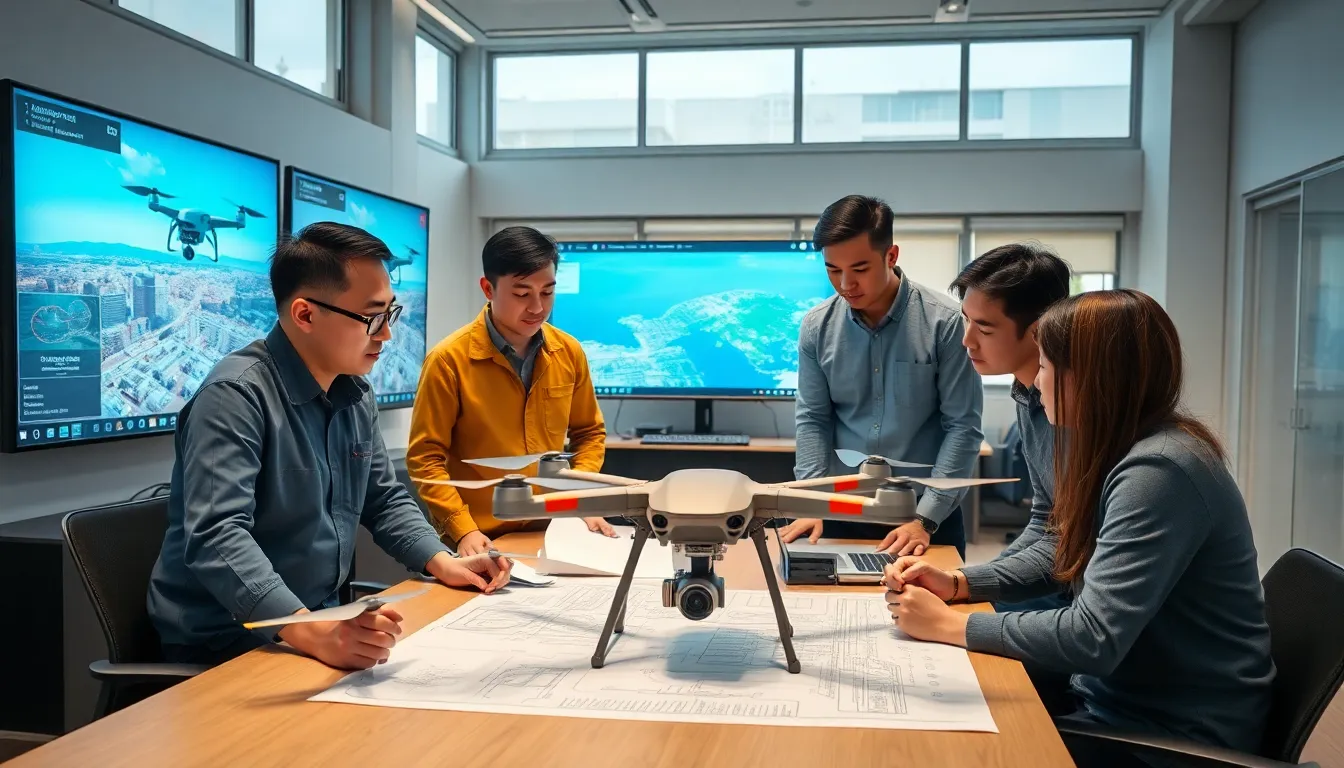
Drones in China are soaring to new heights, and it’s not just because they’re trying to avoid traffic. With a booming tech industry and a government eager to embrace innovation, China has become a global leader in drone technology. From delivering packages faster than you can say “Where’s my pizza?” to transforming agriculture with precision farming, these flying marvels are changing the game.
Overview of Drones in China
China stands at the forefront of drone technology, showcasing significant advancements and extensive applications. The country’s tech industry drives innovation, backed by favorable government policies that promote research and development. Urban areas utilize drones for expedited package delivery services, enhancing logistics efficiency.
Agriculture benefits from drones through precision farming techniques, allowing farmers to monitor crop health and optimize resource use. Infrastructure development often employs drones for surveying, making data collection faster and more accurate. Safety regulations and standards are evolving to ensure both innovation and public safety.
Consumer drones have gained popularity, reflecting a growing market. Various companies offer models suited for recreational use, commercial applications, and aerial photography. China’s commitment to export drone technology has positioned it as a main player in the global market.
Collaboration among companies, research institutions, and the government fosters an ecosystem that encourages continuous growth. Investment in drone technology remains robust, with projections estimating the industry will exceed $20 billion by 2025. The integration of artificial intelligence and machine learning into drones further enhances their capabilities, enabling smarter and more autonomous operations.
Observations indicate that China is not just a manufacturer of drones but also a pioneer in developing use cases that can reshape industries worldwide. As the landscape continues to evolve, drones in China will likely play a pivotal role in various sectors, offering innovative solutions to modern challenges.
The Evolution of Drone Technology in China
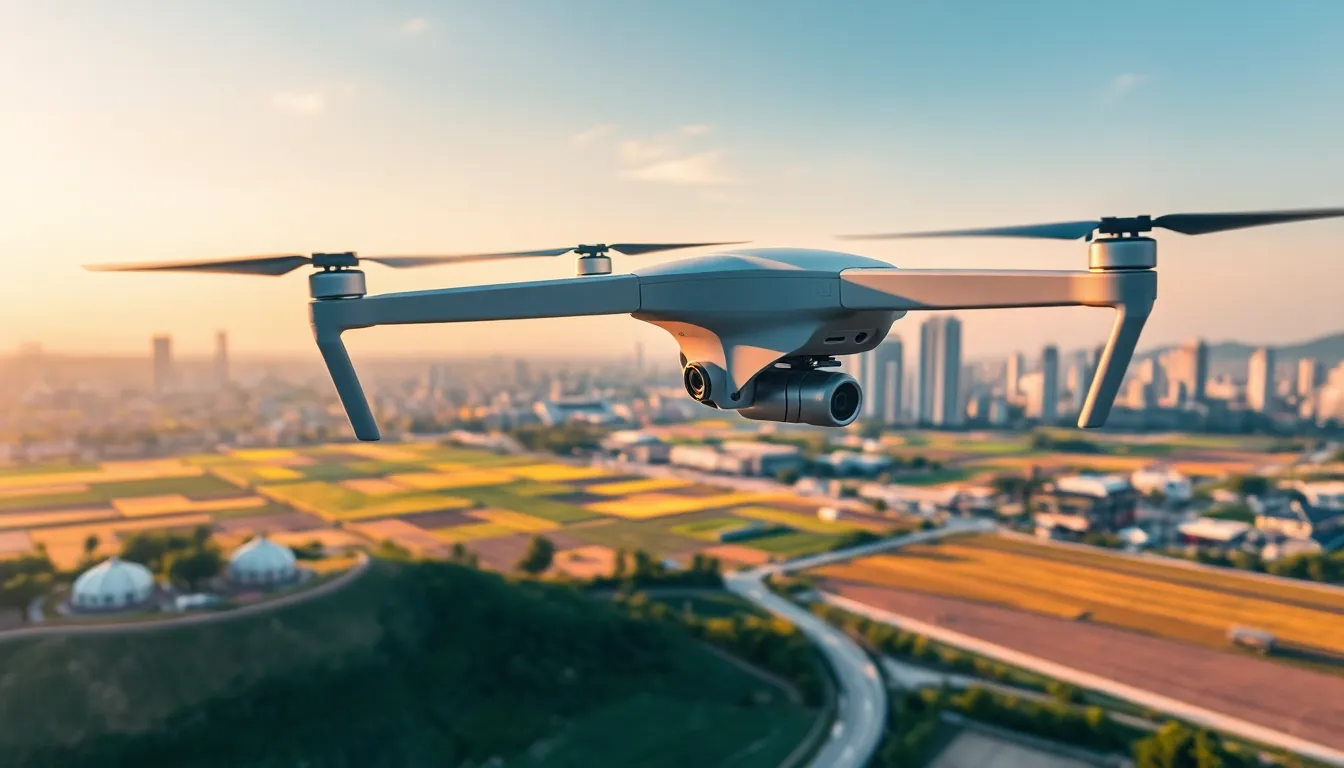
China’s drone technology has advanced significantly over the past decade, establishing the country as a leader in innovation. Supportive policies and a strong tech industry have played crucial roles in driving this evolution.
Key Milestones
China achieved major milestones in drone development starting with the introduction of the first commercial drones in the early 2010s. In 2015, the government launched a national initiative to promote drone applications, setting the stage for rapid growth. In 2017, drone deliveries became a reality when companies initiated pilot programs, showcasing the technology’s delivery potential. By 2020, the industry expanded, with agricultural usage increasing precision farming capabilities significantly. Looking ahead, projections suggest the drone industry will exceed $20 billion by 2025, reflecting continued momentum.
Major Players in the Industry
Leading companies dominate China’s drone landscape, with DJI recognized as a global frontrunner in consumer drones. Established in 2006, DJI has set industry standards, releasing various models for hobbyists and professionals alike. Yangtze River Drone and EHang have emerged as strong contenders, specializing in agricultural and autonomous drone solutions, respectively. Government backing bolsters these companies, fostering a rich ecosystem that supports innovation. Robust collaboration among private firms, research institutions, and government bodies ensures ongoing advancements in drone technology.
Applications of Drones in China
Drones play a significant role across various sectors in China, showcasing their versatility and efficiency. These applications transform traditional practices and enable new possibilities.
Agricultural Use
Drones enhance agricultural productivity through precision farming techniques. Farmers utilize drones for crop monitoring, pest detection, and soil analysis. This technology supports timely interventions, which ultimately boost yields. By 2020, agricultural drone usage surged, reflecting a growing trend in optimizing resource consumption and improving crop health. The integration of drones allows for efficient mapping of large areas in less time, making data collection easier for farmers.
Surveillance and Security
Surveillance and security applications of drones are gaining traction throughout urban areas in China. Government agencies deploy drones for monitoring public spaces and managing crowds during large events. These devices provide real-time data, which enhances safety measures and reduces response times during emergencies. Security firms incorporate drones for patrol duties, improving surveillance capabilities across vast landscapes. The flexibility and reach of drones enable comprehensive oversight that traditional methods often cannot provide.
Delivery Services
Drone delivery services are revolutionizing logistics in China. Companies like JD.com and Alibaba use drones to expedite package deliveries in urban and rural areas. The technology addresses challenges related to traffic congestion and remote locations, offering a streamlined solution for timely deliveries. Successful drone delivery trials date back to 2017, showcasing the viability of drones for commercial use. As of now, this sector continues to expand, with projections indicating it could significantly impact the overall drone industry by 2025.
Regulatory Landscape for Drones in China
Drones in China operate under a complex regulatory framework. Chinese regulations aim to promote safe and sustainable drone usage while fostering innovation in the industry.
Government Policies and Regulations
Government policies shape the drone landscape significantly. The Civil Aviation Administration of China (CAAC) oversees all drone regulations. In 2016, the CAAC introduced the first national drone management policies. These policies require drones over 250 grams to be registered. The registration process includes pilot licensing and operational guidelines, ensuring that operators adhere to safety standards. The 2020 update expanded regulations, allowing drone operations in urban areas. Notably, drones using specific technology, such as remote identification, receive streamlined approvals, encouraging innovation in commercial applications.
Safety and Privacy Concerns
Safety and privacy remain top priorities in China’s drone regulations. Concerns over airspace safety involve the risk of mid-air collisions and unauthorized surveillance. To mitigate risks, the CAAC mandates that drones maintain altitude restrictions and establish no-fly zones around critical infrastructure. Local governments enforce additional measures focused on public privacy, including limitations on recording in sensitive areas. Compliance with regulations protects both individuals and property. Regular inspections of commercial fleets ensure adherence to these policies, emphasizing a commitment to responsible drone technology deployment.
Future Trends in Drones in China
Advancements in artificial intelligence (AI) significantly enhance drone capabilities. AI integration allows for improved navigation, obstacle detection, and real-time data processing. Businesses increasingly rely on drones equipped with AI for more efficient operations, especially in logistics and agriculture.
Moreover, increased collaboration between tech companies and the government is evident. This collaboration supports the development of advanced drone applications, fostering innovation across various sectors. Partnerships often include research initiatives aimed at progressive drone technologies, which drive further adoption.
In addition, 5G technology plays a vital role in future developments. Enhanced connectivity enables drones to transmit data seamlessly, which improves operational efficiency. Faster communication facilitates real-time monitoring in agriculture, surveillance, and urban planning.
Furthermore, the market for specialized drones continues to grow. Drones designed for delivery, surveillance, and environmental monitoring find improving demand in various industries. Companies like DJI and EHang focus on developing specialized models to meet these evolving needs.
Regulatory changes indicate a trend toward easier access for commercial use. Adjustments in laws allow for expanded drone operations in urban areas, aligning with the rapid adoption of drone technology. The regulatory environment adapts to ensure safety without stifling innovation.
Lastly, public awareness and acceptance of drones are on the rise. Increased consumer interest leads to a growing market for recreational drones, fostering a culture of innovation. Enhanced user education regarding safe drone practices also contributes to a more informed public perception.
These trends illustrate that China’s drone industry is poised for significant growth and transformation, solidifying its position as a global leader in drone technology.
China’s drone industry stands at the forefront of technological innovation and application. With robust government support and a dynamic tech landscape, it continues to push boundaries in various sectors. The integration of advanced technologies like AI and 5G is set to further enhance drone capabilities, making them indispensable tools in agriculture, logistics, and public safety. As regulations adapt to foster growth while ensuring safety, the future looks bright for drone technology in China. This momentum not only reinforces its status as a global leader but also opens up exciting opportunities for international collaboration and market expansion.

